
 By admin
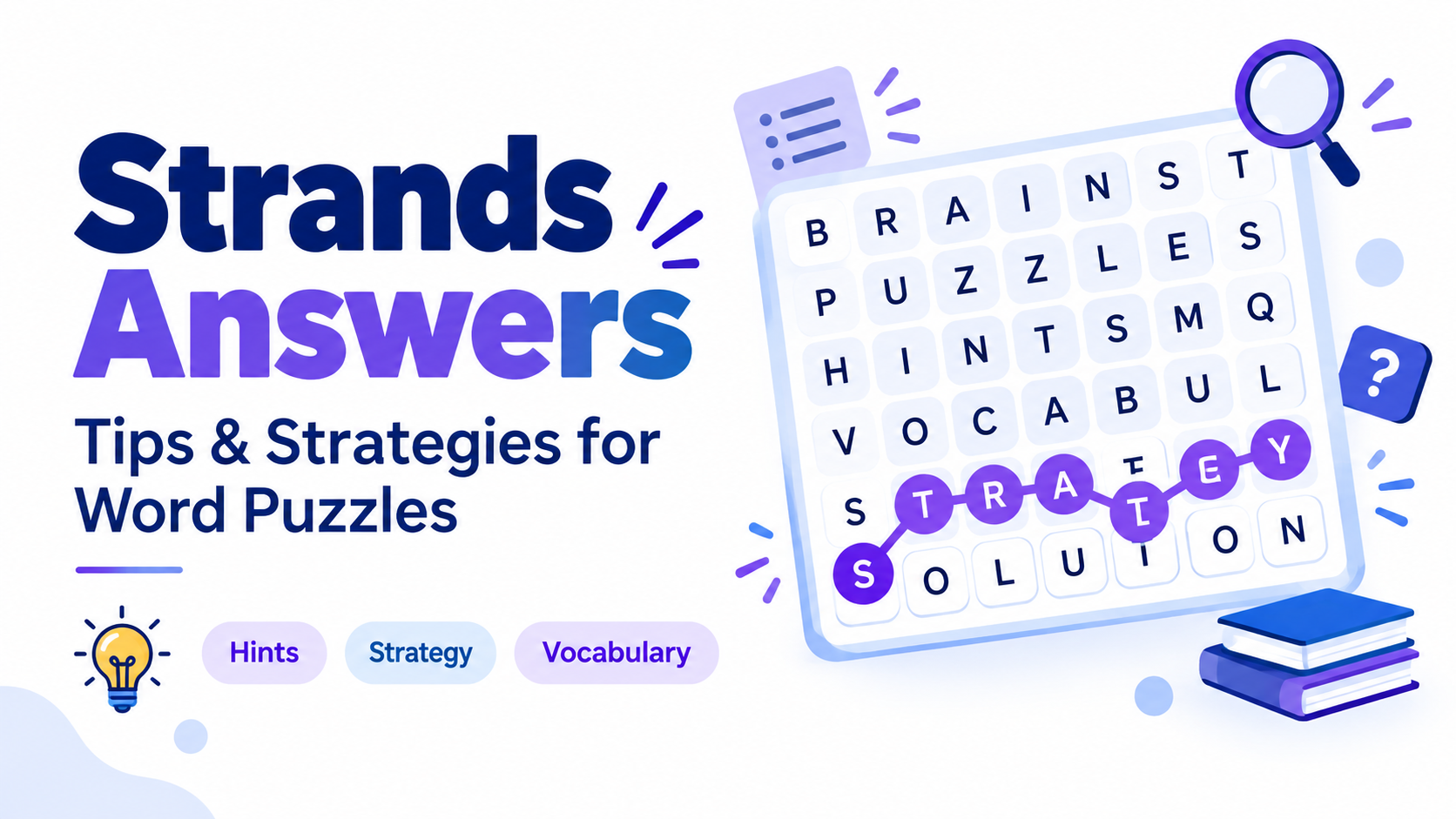
Word puzzles have become a popular way to challenge the mind, discover new vocabulary, and enjoy a short mental break during the day. From traditional crosswords to modern online word games, these activities encourage players to recognize patterns, understand clues, and connect words in meaningful ways. Some puzzles are easy to complete, while others require patience and a different approach to uncover the correct answers.
NYT Strands is one example of a word game that combines letter recognition with a hidden theme. Players must find words connected to the daily topic and identify a special word known as the spangram. For beginners, understanding the rules and developing a few practical strategies can make the experience more enjoyable. With the right approach, players can improve their skills without relying on random guesses.
Understanding How NYT Strands Works
NYT Strands is a word puzzle in which players search for theme-related words in a grid of letters. The goal is to find the words that match the daily theme and discover how they connect to the puzzle’s overall idea. Unlike a traditional word search, the game requires players to interpret the theme and recognize relationships between different answers.
The spangram is another important part of the challenge. It describes the central concept of the puzzle and touches two opposite sides of the board. Finding it can help players understand the theme and identify other possible answers. Beginners should take time to understand these mechanics before focusing on speed, as knowing the objective makes each puzzle easier to approach systematically.
Read the Theme Carefully
The theme is one of the most useful clues available at the beginning of a Strands puzzle. It can suggest a category, a shared characteristic, or a connection between several words. Instead of immediately searching for random letter combinations, think about the different meanings the theme might suggest.
For example, a theme related to a kitchen could involve cooking tools, ingredients, or common kitchen activities. However, themes are not always straightforward, and some require a broader interpretation. Consider several possibilities before committing to one idea. This approach can help you recognize potential answers and avoid spending too much time searching in the wrong direction.
Search for Familiar Letter Combinations
Recognizing common letter combinations can help you find hidden words more efficiently. English contains many familiar patterns, including TH, SH, CH, and ING. When these combinations appear close together in a letter grid, they may provide a useful starting point for identifying a word.
It is also helpful to look for less common letters that can make a potential answer easier to recognize. Letters such as Q, X, and Z may stand out in a grid and narrow down the possible words. Follow connected letters carefully and check whether the sequence forms a meaningful word that matches the theme. A systematic search is usually more effective than selecting letters without a clear reason.
Think of Related Words Before Searching
Once you understand the theme, create a short mental list of words that might belong to it. This technique helps you search with a purpose instead of examining every possible letter combination. If the topic relates to animals, for example, think about different animal names and the categories they belong to.
You do not need to find every possible related word immediately. The purpose is to generate ideas that can guide your attention toward promising letter sequences. If one possibility does not fit the grid, move to another word on your list. Combining vocabulary knowledge with careful observation can make the solving process more organized and less frustrating.
Find the Spangram to Understand the Theme
The spangram is a special answer that captures the central theme of a Strands puzzle. Because it stretches across the board and touches two opposite sides, finding it can provide an important clue about the remaining answers. It may connect ideas that initially seem unrelated or clarify the meaning of a broad theme.
To search for the spangram, consider longer words or phrases that describe the theme as a whole. Look for possible paths that connect the opposite sides of the grid while forming a valid answer. Do not assume that the longest word you notice must be the spangram. Check both its meaning and its path through the letters before deciding whether it fits.
Use Hints Without Losing the Challenge
Hints can be helpful when a puzzle becomes difficult, particularly for new players who are still learning to recognize themes and letter patterns. However, checking answers too early may reduce the opportunity to develop independent problem-solving skills. Try to solve as much of the puzzle as possible before looking for additional guidance.
If you need assistance, use a resource that explains the puzzle rather than simply revealing the completed solution. Players looking for daily Strands answers and hints can visit StrandsAnswer.com for puzzle-related guidance. Reviewing a hint after making a genuine attempt can help you understand how a word connects to the theme and recognize similar patterns in future puzzles.
Avoid Random Guessing
Random guessing can make a puzzle feel more difficult because it encourages you to follow letter combinations without considering their meaning. In a themed word game, a possible word must make sense within the puzzle’s context. Even if a sequence forms a real word, it may not be relevant to the daily theme.
Instead, evaluate each possibility before tracing the letters. Ask yourself whether the word belongs to the category, whether its spelling is correct, and whether the letter path follows the game’s rules. If the answer does not fit, return to the theme and consider another possibility. This simple habit can help you spend more time on useful ideas and less time on unlikely guesses.
Build Your Vocabulary Through Practice
A broader vocabulary can improve your ability to recognize hidden words. Players who regularly encounter different topics may become more familiar with words related to nature, science, food, sports, entertainment, and everyday activities. This knowledge can be particularly helpful when a puzzle uses a theme that is not immediately obvious.
Reading books, articles, and educational material is a practical way to discover new words. When you encounter an unfamiliar term, learn its meaning and consider how it relates to similar words. You can also practise with crosswords, anagrams, and traditional word searches. These activities develop different language skills that may be useful when solving themed puzzles.
Develop a Consistent Solving Routine
A consistent routine can make each puzzle easier to approach. Begin by reading the theme, identifying possible categories, and scanning the grid for familiar letter combinations. Next, search for likely words and use each discovery to reconsider the remaining letters. This process allows you to build on what you already know instead of starting from scratch after every answer.
It can also help to change your approach when progress slows down. If you have repeatedly searched one section of the board without success, examine another area or consider a different interpretation of the theme. Taking a short break may help you return with a fresh perspective. The goal is to remain flexible while following a clear method.
Learn From Every Completed Puzzle
Each completed puzzle provides an opportunity to understand how themes and words connect. After finishing, think about which clues helped you find the answers and which parts caused difficulty. You may discover that certain categories are easy for you, while unfamiliar vocabulary or indirect themes require more attention.
Reviewing the solutions can be especially useful when an answer surprised you. Consider why the word matched the theme and how its letters formed the required path. Over time, these observations can help you recognize recurring patterns and improve your confidence. Instead of treating a difficult puzzle as a failure, view it as a chance to learn something new.
Enjoy the Process Rather Than Focusing Only on Speed
Solving a puzzle quickly can feel rewarding, but speed is not the only measure of success. Word games also offer an opportunity to practise language skills, explore new ideas, and enjoy a manageable challenge. Rushing through every step may cause you to overlook useful connections or make unnecessary mistakes.
Choose a pace that suits your experience and interests. Beginners can focus on understanding the rules and finding correct answers before trying to improve their completion times. As their skills develop, they may naturally become faster at recognizing patterns and interpreting themes. Keeping the activity enjoyable makes it easier to maintain a regular habit.
Conclusion
NYT Strands combines vocabulary, pattern recognition, and logical thinking in a daily word puzzle. Understanding the theme, searching for familiar letter combinations, and learning how the spangram works can help beginners approach each challenge with greater confidence. Avoiding random guesses and using hints thoughtfully can also make the experience more productive.
The best way to improve is through regular practice and careful review. Each puzzle offers a new opportunity to explore language and discover connections between words. With patience and a consistent strategy, players can develop better solving habits while continuing to enjoy the challenge of finding Strands answers.